Thursday, 16 April 2026

Mary Anita "Neta" Snook Southern (1896 –1991) - pioneer American aviator

Mary Anita Snook (known as "Neta")  was born on 14th February 1896 in Mount Carroll, Illinois, USA.  She became interested in machinery at an early age, spurred by a fascination with her father's cars. At the age of four, she would sit on her father's lap and help him steer his Stanley Steamer on the hills of their Illinois town. As she grew older, he taught her the inner workings of cars. Anita  attended the Frances Shimer School, which later became Shimer College, graduating in 1912.

When the family moved to Ames, Iowa, in 1915, Snook attended Iowa State College (now Iowa State University), taking courses in mechanical drawing, engines and farm machinery repair. She became fascinated with literature related to aviation and soon wanted to learn to fly.

During her second year at college, Anita applied to the Atlantic Coast Aeronautical Station and the Curtiss-Wright Aviation School in Newport News, Virginia but was denied admittance, as no women were allowed.

The following year, an advertisement for the Davenport Flying School in Iowa brought her back home, where she became one of the first female student pilots.

After a major crash in which the school's President was killed, the school closed and "Curly," as Anita had been dubbed by fellow students, began searching for another flight training school. 

In 1917, Anita eventually gained entry into the Curtiss-Wright Aviation School and put in many hours in the air until civilian flights in the United States were banned for the duration of The First World War. In 1918 Anita worked briefly for the British Air Ministry in Elmira as an expeditor putting her mechanical skills to good use, inspecting and testing aircraft parts and engines on their way to combat in Europe.

In 1918 Anita worked brieflyfor the British Air Ministry in Elmira , Chemung County, New York as an expeditor, putting her mechanical skills to good use, inspecting and testing aircraft parts and engines on their way to combat in Europe.

In 1922, at the age of 25, Anita married William Southern. She] became pregnant and gave up flying, selling her business. Not much was heard about Neta Snook Southern in the years following her retirement.

Anita died at the age of 95 on March 23, 1991, at her *adobe home, built by Neta and William in Los Gatos, California.

*An adobe house is a structure built using sun-dried bricks made from earth, water, sand, and organic materials like straw or dung. Known for thick, sculptural walls with high thermal mass, these durable, fire-resistant homes stay cool in summer and warm in winter, making them ideal for arid climates.

Sources:  Mastermind Television Programme, Wikipedia. 


Tuesday, 1 July 2025

A new book about the British Red Cross in Italy during the First World War : "Vado con la Britannica!"


Sergio explains: “I wrote this book after a long research. In four years of study I was able to consult many documents from Italian and British archives, including those of the Imperial War Museum and the Archives of the Historical Office of the General Staff of the Italian Army, and read several books and diaries that described the contribution given by the women and men of the British Red Cross on the Italian front during the First World War. I thought that their story, little known but of great interest, had to be told. They were truly a wonderful "band of brothers" and their story inspired Ernest Hemingway in writing his novel A Farewell to Arms. The volume was among the winners of the competition promoted by the publishing house Tralerighe of Lucca in 2022 and was published in 2024. The volume is available to purchase on Amazon and on several other online platforms.”

Friday, 11 October 2024

Jessie Scorgie, ARRC - WW1 Nurse

With thanks to Historian Lawrence Taylor for the following information 

Jessie Scorgie served as a Nurse in the Scottish Women's Hospitals [British Committee French Red Cross] in Kraguievatz, Serbia from July 1915 to February 1916. She took up the post of Sister at the Queen Alexandra's Imperial Military Nursing Service Reserve General Military Hospital, Colchester until July 1919 when she was awarded Associate Royal Red Cross. 

On leaving the QAIMNS Jesse took up a post at the London Homeopathic Hospital.

From the “Nursing Journal”, April 1921:

“London Homeopathic Hospital, Great Ormond Street, W.C.

Miss J. Scorgie has been appointed Sister of a Women’s Surgical Ward in the same institution. She was trained at the Royal Infirmary, Manchester, and has been Theatre and Ward Sister in the same institution, and Sister in the Scottish Women’s Hospital, Serbia. She served four years in Queen Alexandra’s Imperial Military Nursing Service Reserve, and holds the Royal Red Cross (Second Class) and the Serbian Cross Good Samaritan.”

Photo from “Manchester Evening News” 9 December 1955, – Jessie’s retirement 

NOTE\:

Colchester Military Hospital was one of several army hospitals in England, UK. It closed when the QEMH Woolwich opened in 1977 and was demolished some time later. Local army medical needs were met, and still are, by the new Medical Reception Station (MRS) Colchester.

Sources:

Lawrence Taylor, 7 October 2024

https://www.findmypast.co.uk/image-viewer?issue=BL%2F0000272%2F19551209&page=6&article=148&stringtohighlight=jessie+scorgie

https://livesofthefirstworldwar.iwm.org.uk/lifestory/4964023

Photo from “Manchester Evening News” 9 December 1955, – Jessie’s retirement 


Monday, 7 October 2024

The five Gladstone sisters and their mother, WW1


Information posted Liz (Janet) Tobin almost ready to decamp from X via Twitter 

Five sisters and their mother who were all born in India.: 

Florence Eliott Gladstone – the girls’ mother b. 1855

Florence Amy Loree Gladstone b. 1884

Rose Gladstone b. 1885

Elsie Mabel Gladstone b. 1888

Margaret Cecil Gladstone  b. 1891 

Gladys Cornelius Gladstone b. 1893 

During the First World War the five women contributed to the war effort in various ways. The Gladstones lived in Jersey, Channel Islands, where two of the sisters and their mother volunteered with the local Red Cross. Two other sisters served as VADs in Malta. A fifth sister, Elsie, was a nurse and trained as an anaesthetist with the QAIMNS and served in France and Belgium, where she died in 1919.

Elsie Mabel Gladstone, ARRC, Queen Alexandra's Imperial Military Nursing Service. 

Sister Elsie Gladstone

Elsie died on 24th January 1919 and was buried in Belgrade Cemetery, Namur, Belgium, Grave Ref. I.A.5.

I mentioned Elsie in one of my posts in 2014 - 

https://inspirationalwomenofww1.blogspot.com/search?q=Gladstone

Additional Sources:  Find my Past, and

https://livesofthefirstworldwar.iwm.org.uk/community/2980


Saturday, 5 October 2024

Helena Maria Paderewska (1856 – 1934) – Polish founder of The Polish White Cross during WW1

With thanks to Professor Margaret Stetz for finding Helena for us 

Helena Maria von Rosen was born on 1st August 1856 in Warsaw. Her parents were Baron Wladislaw Friedrich Johann Kasimir von Rosen, Polish of Baltic German descent and Zofia Taube, who met during his military service during the Crimean War. Zofia was born into a noble family of Baltic heritage whose ancestors came from Denmark. Helna’s mother died shortly after Helena's birth.

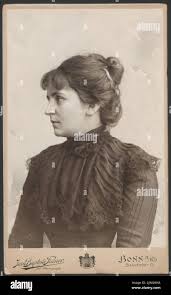
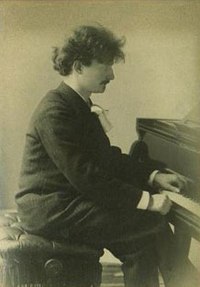
Helena met Ignacy Jan Paderewski when he was a promising young pianist. They were married in Warsaw on 31st May 1899.

As hostilities began in late July 1914, the Paderewskis were celebrating her husband’s name day and her birthday with their customary gathering of friends, musicians and politicians at their home in Switzerland. Their funds (and especially those of their Polish friends) were frozen in Lausanne (although they managed to live on credit), and travel became difficult. In November 1914, Russian Grand Duke Nicholas reportedly promised Polish independence after the war, but Paderewski feared it was a ruse to quieten rampant unrest and began working with Erasmus Piltz, Henry Sienkiewicz, Wincenty Lutosławski, Józef Wierusz-Kowalski, Jan Kucharzewski and other Polish exiles for Polish relief.

In January 1915, Paderewski planned a three-month trip to Paris, London and the United States, initially thinking he and his wife could lobby for Polish relief, as well as continue his concert career. However, they soon realized the difficulty of the task they had undertaken. Russia's ambassador in Paris, Count Alexander Izvolsky, was anti-Polish, though a politically necessary member of any relief committee of Polish exiles in that country. 

Helena was able to visit Polish conscript prisoners from the German army, as well as start a doll-making project among nearly destitute Polish students and artisans in Paris. For the next few years, she hauled trunks of dolls and sold them in conjunction with her husband's concerts to develop profits to buy milk for Polish babies and do other good works. In London, Russia's ambassador Count Alexander Benckendorff helped Paderewski's Polish relief efforts both in Britain and its overseas colonies. However, the English public knew little about Poland, so Paderewski began writing letters to newspaper editors and some were published. So began his role as Polish spokesman. In April 1915, the Paderewskis boarded the transatlantic steamship Adriatic for the United States, but the sinking of the Lusitania the following month transformed their short trip into one of more than three years.

Dolls made by WW1 Polish refugees in France for sale through Helena Paderewska.  These are on view in the Edinburgh Museum of Childhood and the photograph was taken by Dr. Margaret Stetz.

During their three years of travels in the United States, Canada and the Caribbean, Helena Paderewska organized help for the war's victims in Poland, as well as for Polish soldiers, who first fought in France and later on the Eastern Front. With the help of Polish emigrants in the United States, Paderewska founded the Polish White Cross in February 1918 (initially the Red Cross would not permit use of its name since Poland was not a country), and also helped found the Relief Society for Intelligence.

Helena died on 16th January 1934


From the Museum of Childhood
in Edinburgh - photo by
Dr. Margaret Stetz


Ignacy Jan Paderewski 

NOTE
Paderowski was a Polish pianist, composer and statesman 
who became a spokesman for Polish independence. 
In 1919, he was the nation's Prime Minister and Foreign Minister, 
during which time he signed the Treaty of Versailles, 
which ended the First World War. 


Professor Margaret Stetz is the Mae and Robert Carter Professor of Women's Studies and Professor of Humanities at the University of Delaware in America. 

Thursday, 26 September 2024

The Hush WAACs of the First World War

Found on Twitter from Dr Helen Fry | WWII Historian @DrHelenFry

The first women in uniform ever posted to the front line during the First World War was in Septembret 1917.

They were called "Hush WAACS" and were posted to the front line in France. Their top secret, primary work was to decode messages. They were the early codebreakers and Mabel Peel was one of them.


Mabel Dymond Peel (1879 – 1938) was born in Barton upon Irwell, Lancashire, UK, in 1879 – the birth being registered in September of that year. 

The Hush WAACs were a group of seventeen British women who worked on the front line as codebreakers in France during World War One. After the war, two went on to work on diplomatic codebreaking for MI1b. Although women were already working as codebreakers in Room 40 and MI1b, the Hush WAACs were the only women to serve as codebreakers at the front line during WW1.

In 1917, the British Army in France was short of manpower, and members of the Women's Army Auxiliary Corps were asked to volunteer for front line service in supporting roles. Six women were identified as capable of supporting the I(e)C front line codebreaking work at Saint-Omer in northern France and arrived there on 28th September 1917. They had not been told what their duties would be.

They were joined by another three women who found conditions too difficult and returned to England. Between 1917 and the end of the war in November 1918, a total of seventeen women were sent to work in the I(e)C codebreaking team. There were typically around 12 women in the team at any time. They were aged between 22 and 55 years old, and had all volunteered for front line duty. All were middle or upper class, and spoke German.

Sources: https://www.gchq.gov.uk/information/hush-waacs

Wikipedia, Find my Past, FreeBMD https://welwyngarden-heritage.org/news/miss-mabel-dymond-peel

Dr Fry has written a book entitled “Women in Intelligence” :


The book is a history of women in British military intelligence from 1914 to 1945 – available to purchase from https://www.helen-fry.com/women-in-intelligence      


Wednesday, 22 May 2024

Kate Manley, OBE (1866 – 1945)

Born in Bridport, Dorset, UK in 1866, Kate Manley became the UK Ministry of Food’s Chief Culinary Scientist in 1917.  

In November 1917, Kate started a programme to train hundreds of women to work as supervisors in national kitchens.  For her war work, Kate was awarded an OBE in 1919. 


Sources: Information skindly ent to me by Michael Downes, a retired teacher living in East Devon with an interest in local history.

Find my Past, FreeBMD, Imperial War Museum, Western Morning News, 15th August 1945


An image sent to me by Michael Downes


From Imperial War Museum


Western Morning News, 15th August 1945


Sunday, 19 May 2024

Vesta Tilley - stage name of Matilda Alice Powles (1864 - 1952) – British music hall star - one of the best-known male impersonators of her era.

With thanks to John Daniel for this information 


Matilda Alice Powles was born in Worcester on 13th May 1864. She was the second child of thirteen children born to Henry Powles, a musician known as Harry Ball, and his wife, Matilda Powles (nee Broughton).

With her father's encouragement, Matilda made her stage debut when she was three years old.  By the time she was six, she was performing songs dressed as a man. She began her professional career in 1869. – her first character of note was "Pocket Sims Reeves", spoofing the act of the then-famous opera singer Sims Reeves by performing his songs such as "The Anchor's Weighed". 

She was billed as Vesta Tilley for the first time in April 1878 when performing at the Royal Music Hall in Holborn, London. As a male impersonator, Alice performed as a dandy or a fop, a famous character being "Burlington Bertie", although she also played other roles such as policemen and clergymen.

In 1890 Alice married Sir Abraham Walter de Frece (7 October 1870 – 7 January 1935) - a British theatre impresario, and later Conservative Party politician, who served as a Member of Parliament (MP) from 1920 to 1931.

Alice and her husband ran military recruitment drives during the First World War and Alice sang at charity events dressed in khaki fatigues  performing numbers written by her husband such as "Jolly Good Luck to the Girl Who Loves a Soldier", "The Army of Today's All Right", "Six Days' Leave", and "Your King and Country Want You" (also known as "We Don't Want to Lose You but We Think You Ought to Go"). She was nicknamed "England’s greatest recruiting sergeant" since young men were sometimes asked to join the army during her shows. Over the course of a week in Hackney, she enlisted so many people they became known as "The Vesta Tilley Platoon".

After the war, music halls declined in popularity. Walter de Frece was knighted in the 1919 King's Birthday Honours List for his services to the war effort, with Alice becoming Lady de Frece. Walter decided to run for Parliament and Alice chose to end her stage career. Her farewell tour took a year to complete, between 1919 and 1920. All proceeds were given to a local children's hospital.  She made her final appearance at the Coliseum Theatre, London on Saturday 5th June 1920. In their review, "The Times" newspaper called it a "wonderful night" and commented that at the end she was "gradually being submerged under the continuous stream of bouquets".

Alice died in St James's, London on 16th September 1952, aged 88. Her body was buried alongside her husband, at Putney Vale Cemetery.

Image:  A postcard of Vesta Tilley dressed in Army uniform during WW1.  These cards were sold in aid of the War Relief Funds.

Music Hall in WW1

The First World War may have been the high-water mark of music hall popularity. The artists and composers threw themselves into rallying public support and enthusiasm for the war effort. Patriotic music hall compositions such as "Keep the Home Fires Burning" (1914), "Pack up Your Troubles" (1915), "It's a Long Way to Tipperary" (1914) and "We Don't Want to Lose You (but we think you ought to Go)", were sung by music hall audiences, and sometimes by soldiers in the trenches.

Many songs promoted recruitment ("All the boys in khaki get the nice girls", 1915); others satirised particular elements of the war experience. 

Sources: Information supplied by John Daniel, 

Additional sources:

Find my Past, FreeBMD, Wikipedia 


Sunday, 28 April 2024

The Hewins Sisters in WW1 – Dorothy Hewins (1894 – 1949) and Margaret Nancy Hewins (1902 – 1978) - self-published authors of ‘Lest We Forget: Being Some Account of the Smaller Incidents in the Great War’.

 With thanks to Historian Debbie Cameron* for posting a portrait of Nurse Dorothy Hewins in WW1 on her Facebook Group Remembering British Women in WW1 – The Home Front and Overseas 


Nurse Hewins by Helen Margaret McKenzie

Dorothy Hewins was born on 24th Febuary 1894 in Oxford, UK, where her Father, William Albert Samuel Hewins was a Professor of Economics.  Her Mother was Margaret Hewins, nee Slater.  Dorothy and Nancy had a brother – Maurice Gravenor Hewins - who was born in Chelsea, London, UK in 1897.  Margaret Nancy Hewins was born on 14th February 1902 in Putney, London, UK in 1902.

Maurice served as a 2nd Lieutenant in the 1st Middlesex Regiment T.F. Res., attached to the Colonial Office.

During the First World War, Dorothy volunteered to work at the Surgical Requisites Association (SRA)** in Mulberry Walk, Chelsea. In this role she trained and eventually became a fulltime member of the first ever team to develop and apply plaster casts to the injured.

Dorothy struggled with ill health for most of her life and died in 1949.  

Nancy studied at Oxford Unversity and became a theatre director and actress.   In 1927  Nancy created a women’s theatre troupe called Osiris, which toured the country for some four decades.  Nancy died in 1978. 


Sources:  Initial Source: Debbie Cameron’s Facebook Group

https://www.facebook.com/groups/1468972083412699/

Additional Sources: Find my Past, FreBMD, Wikipedia and

https://www.bishopsgate.org.uk/stories/womens-history-month-the-hewins-sisters

http://www.bathwarhospital.org/articles/surgical-requisites-association/

“Gloucestershire Echo”, 19 March 1940

NOTE 

**The Surgical Requisites Association was an offshoot of Queen Mary’s Needlework Guild, who undertook to supply surgical dressings. Two women, Anne Acheson and Elinor Halle, who were both sculptors, devised a way of making splints out of papier mache that were both lighter and cheaper than those made of traditional materials. Old sugar bags were found to be the best material, and these were collected from grocers and members of the public with the help of boy scouts. The Bath branch of the association, believed to be one of only 6 outside London, was established in January 1918, and formally opened later that year by HRH Princess Beatrice accompanied by Lady Crutchley, the head of the first depot in Mulberry Walk, London.

Queen Mary’s Needlework Guild

In 1885 Princess Mary Adelaide of Teck (mother of the future Queen Mary) had became patron of The London Guild, beginning an unbroken line of Royal patronage.  In 1897 her daughter, the Duchess of York (the future Queen Mary) became the patron, having helped her mother with the charity since childhood.

The Guild was established in 1882 when the matron of an orphanage in Dorset asked Lady Wolverton for 24 pairs of knitted socks and 12 jerseys for the children in her care.  She started a small Guild amongst her friends to provide not less than 2 garments for each child at the orphanage and to supply clothing for other charitable institutions.  The Guild grew quickly and by 1894 The London Needlework Guild (as it was then known) was making and distributing over 52,000 garments a year.

On becoming Queen Consort in 1910, Queen Mary renamed the charity Queen Mary’s Needlework Guild and in 1914 established St James’s Palace as the headquarters.

(The portrait of Nurse Hewins was painted by Scottish artist and etcher Helen Margaret MacKENZIE (1881-1966) who was born in Elgin, Morayshire, Scotland - the daughter of an architect. She studied at the Royal College of Art with Gerald Moira, gaining her diploma in 1906.)

*https://www.facebook.com/groups/1468972083412699/

Friday, 29 March 2024

Muriel Perry (1899 - ?) - British VAD

Muriel Perry, WW1
Born Muriel Haidée Perry, on about 5th March 1899, when the First World War began, Muriel founded the Sailors’ and Soldiers’ Free Buffet at Victoria Station, at which servicemen were fed.  

According to an article in “The Tatler” magazine of 15 August 1917, the Buffet cost around £1,000 per month to run and was entirely supported by donations and unpaid volunteers. Mrs Douglas McGarel Hogg was the Honorary Treasurer of the Buffet.

Muriel then drove a motor-kitchen to the Western Front, in aid of the Italian Red Cross. 


My friend Sergio Sbalchiero kindly sent me this photo of Muriel Perry with other volunteers in front of an Italian armoured car with some Italian soldier (Library of Congress-Longshaw Kraus Porritt Collection)


While in Italy Muriel fell in love with Emanuele Filiberto, the Duke of Aosta and a member of the House of Savoy, who she met after being introduced to him. A short while later she wrote him a letter, and uncertain of how to address royalty, she wrote ‘Dear Man’ and this charmed him. Although he was old enough to be her father, and married, their romance appeared harmless and he placed Muriel in a convent in Trieste after she developed dysentery. 

Several weeks later, Muriel returned to London then went to Belgium to organise a rehabilitation centre for wounded soldiers. She was decorated seven times for her war work, including an OBE.

Muriel’s daughter Sally Perry (1909  - 1990) married Gerald Grosvenor on 11th April 1945. He became Duke of Westminster in 1963 and Sally became Duchess of Westminster.

Original source post about .R. Ackerley (1896 – 1957) – WW1 soldier poet and playwright

Additional Sources: 

https://themitfordsociety.wordpress.com/tag/muriel-perry/

https://blog.maryevans.com/page/2/


Saturday, 21 October 2023

Sofia Flora Skipwith, OBE (1855 – 1940) – WW1 VAD who founded an Auxiliary Hospital in her home Loversall Hall, Yorkshire

Sofia Flora Cooke Yarborough was born on 18th November 1855 in Middlesex, England, UK. Her parents were Charles C. Yarborough, a retired British Army Lieutenant-Colonel, and his wife, Ester Ann.C. Yarborough. 

In 1887, in Tonbridge, Kent, UK, Sophia married widower and British Army Officer Grey Townsend Skipwith (1838 – 1900) who had 8 children by his previous wife.  

Sofia and Grey lived in India and had two children - Flora Blanche Skipwith, born in India in 1889 and Charles Grey Yule Skipwith, born in India in 1890.  Charles also joined the British Army. Sofia’s husband died in India in 1900. 

When war broke out, Sofia joined the local VAD and turned her home – Loversall Hall in Doncaster, Yorkshire, UK - into an Auxiliary Hospital which was opened in 1914 and had 100 beds.  Sofia was the Hospital’s Commandant. 


One anonymous soldier-poet wrote of Loversall Hall: 

“The stately homes of Britain… 

Where many a high-born beauty her gracious warfare raged, 

Men at the call of duty, lie broken, maimed and aged, 

And many a man is living, 

Who for his death has prayed, 

Thanks to his maker giving 

That he the woman made.” 

Sofia’s daughter, Flora Blanche Skipwith, also served in her Mother’s hospital in WW1, as did the writer and poet Barbara Euphan Todd (1890 – 1976) – best known for her ten books for children about a scarecrow called Worzel Gummidge.  Having initially worked on the land, Barbara worked at the Hospital from 12/12/1917 until 15/02/1919

Sophia helped hundreds of soldiers, kept in touch with many of them when they returned to the front line, and was awarded an Order of the British Empire (OBE) for her war work.

Sofia died on 19th December 1940.  Her Obituary was published in the “Yorkshire Post and Leeds Intelligencer” on  24th December 1940. 

Loversall Hall

Built by the Fenton Family of Leeds between 1808 and 1816, Loversall Hall is situated in the heart of the beautiful South Yorkshire Countryside within the village of Loversall just on the outskirts of Doncaster.

 OBE

The Most Excellent Order of the British Empire is a British order of chivalry, rewarding contributions to the arts and sciences, work with charitable and welfare organisations, and public service outside the civil service. It was established on 4th June 1917 by King George V and comprises five classes across both civil and military divisions, the most senior two of which make the recipient either a knight if male or dame if female. There is also the related British Empire Medal, whose recipients are affiliated with, but not members of, the order.

The five classes of appointment to the Order are, from highest grade to lowest grade:

Knight Grand Cross or Dame Grand Cross of the Most Excellent Order of the British Empire (GBE)

Knight Commander or Dame Commander of the Most Excellent Order of the British Empire (KBE or DBE)

Commander of the Most Excellent Order of the British Empire (CBE)

Officer of the Most Excellent Order of the British Empire (OBE)

Member of the Most Excellent Order of the British Empire (MBE)

OBE

Sources: Find my Past, FreeBMD 

https://www.myheritage.com/names/grey_skipwith

https://www.findagrave.com/memorial/192636041/sophia-flora-skipwith

https://www.doncasterfreepress.co.uk/news/new-exhibition-reveals-doncaster-womens-role-in-first-world-war-475964 14th Jul 2016


https://www.harnessproperty.com/listing/79cc4bb1-4e49-5b9c-807b-8ef3d2b5fa02


Julia Warde-Aldam MBE, ARRC (1857 - 1931) – opened her house as an Auxiliary Hospital, serving as Commandant and Matron

Sarah Julia Warde was born in Carleton, near Pontefract, Yorkshire, UK in early 1857.  Her parents were Revd. William Warde, an Anglican Church Minister - a former Vicar of Campsall - and his wife, Marianne Warde, née Smithson.

On her father's death in 1868, Julia and her elder sister Mary Ann jointly inherited Hooton Pagnell Hall, near Doncaster, which had been bought by the family of Sir Patience Warde in 1704. Mary died in 1880, leaving Julia as sole inheritor.

On 30th Apreil 1878 Julia married William Wright Aldam, son of William Aldam MP and owner of Frickley Hall, taking the name Warde-Aldam. They had two sons, William St. Andrew (1882–1958), who inherited the Hooton Pagnell estate, and John Ralph Patientius (1892 - 1973), who inherited the Frickley estate. On Willam's father's death in 1890, the couple also inherited Healey Hall in Northumberland and in 1899 they purchased the estate of Ederline in Argyllshire.

In September 1914, a month after the Britain's entry into the First World War, Julia opened up Hooton Pagnell Hall as the Hooton Pagnell Auxiliary Military Hospital. She took on the role of Red Cross Commandant and Matron of the hospital, and was awarded an MBE in the 1918 Birthday Honours and the Royal Red Cross, Second Class.

Julia died in 1931.

Sources: Find my Past

https://www.doncasterfreepress.co.uk/news/new-exhibition-reveals-doncaster-womens-role-in-first-world-war-475964 14th Jul 2016

Imperial War Museum website for photograph of Julia

OBE

The Most Excellent Order of the British Empire is a British order of chivalry, rewarding contributions to the arts and sciences, work with charitable and welfare organisations, and public service outside the civil service. It was established on 4th June 1917 by King George V and comprises five classes across both civil and military divisions. 

The five classes of appointment to the Order are, from highest grade to lowest grade:

Knight Grand Cross or Dame Grand Cross of the Most Excellent Order of the British Empire (GBE)

Knight Commander or Dame Commander of the Most Excellent Order of the British Empire (KBE or DBE)

Commander of the Most Excellent Order of the British Empire (CBE)

Officer of the Most Excellent Order of the British Empire (OBE)

Member of the Most Excellent Order of the British Empire (MBE)


MBE

Member of the Most Excellent Order of the British Empire, an MBE is the third highest ranking Order of the British Empire award (excluding a knighthood/damehood), behind CBE and then OBE.

The MBE is awarded for an outstanding achievement or service to the community which has had a long-term, significant impact.

The Royal Red Cross (RRC) medal was introduced by Queen Victoria on 27th April 1883. The Royal warrant provides for the award to any ladies, whether subjects or foreign persons, who may be recommended by Our Secretary of State for War for special exertions in providing for the nursing of sick and wounded soldiers and sailors of Our Army and Navy. (During the reign of King George V the words 'or Our Air Force in the field' were added). Those awarded the 1st class medal are known as members whilst those awarded the 2nd class are known as associates (ARRC).   


Thursday, 17 August 2023

Lady Edmond Talbot (1859–1938)


With thanks to Chris Warren for contacting me and

sending me copies of his two WW1-related books 

Born Lady Mary Bertie, daughter of the Earl of Abingdon, she was married on 5th August 1879 to Edmund Talbot (1855 – 1947), whose name at birth was Lord Edmund Bernard FitzAlan-Howard By Royal Licence, he assumed the name Talbot in 1876 to enable him to inherit the estates of Bertram, Earl of Shrewsbury. 

Lord and Lady Talbot had two children and lived in Cumberland Lodge in Windsor Great Park, London, UK.   They were Catholic. Lord Talbot was elected Member of Parliament for Chichester in 1894, a seat he held until 1921. In April 1921 Lord Edmund Talbot was appointed by the British government as Lord Lieutenant, or Viceroy, of Ireland. Much was made of the fact that Talbot was Catholic – the first to hold the office since the 17th century.


Retired school teacher Chris Warren has published two excellent WW1-related books:


- his Uncle Jack’s letters sent home from the Western Front - “Somewhere in France: Letters written from the Front 1914 – 1918 by Jack Turner, MC, Croix de Guerre”.

And

-  “In Flanders Now: The War Poems of Father Albert Purdie 1915 - 1918”

John Turner MC, Croix de Guerre (1882 – 1918) – British schoolteacher and artist (known as Jack Turner).    http://lesserknownartists.blogspot.com/2023/08/john-turner-mc-croix-de-guerre-1882.html

In a letter home written in July 1915 by Chris’s Uncle Jack when he was serving on the Western Front, he wrote about meeting the Catholic Chaplain Father Albert Purdie and reading the poem Father Purdie had written about Ploegsteert Wood. 

For the poem by Father Purdie, please see

http://forgottenpoetsofww1.blogspot.com/2023/08/albert-bertrand-purdie-1888-1976.html

In an extract from one of Jack’s letters published in the book, he mentions being given a copy of a book – a special gift to Catholic soldiers during the First World War from Lady Edmond Talbot.

“He has also given me a jolly little “Garden of the Soul” (Lady Edmond Talbot’s gift to the Catholic soldiers) which is small but has all the offices in.”


Chris Warren’s wonderful books can be purchased by following these links:

https://www.blurb.co.uk/b/11285382-in-flanders-now

 https://www.blurb.co.uk/b/9304624-somewhere-in-france

Sources:

“Somewhere in France: Letters written from the Front 1914 – 1918 by Jack Turner, MC, Croix de Guerre”.

https://www.hcbooksonline.com/product/garden-of-the-soul-catholic-repository-1914/


Thursday, 25 May 2023

Lady Sybil de Vere Brassey (1858 - 1934) – British Suffragette

Sybil de Vere Capell was born on 29th November 1858 at 2 Lyall Street, Belgrave Square, London, UK.   Her parents were Arthur de Vere Capell, Viscount Malden, a Lieutenant-Colonel in the British Army, and his wife, Emma Martha, nee Meux. 

On 18th September 1890, Sybil married Thomas Brassey, Baron Brassey of Bulkeley, 1st Earl Brassey, son of Thomas Brassey (1805 – 1870) and Maria Farringdon Harrison. They were married in St. Paul's Church, Knightsbridge, London, UK.  Sybil was the second wife of Lord Thomas Brassey, a former Liberal Member of Parliament, who was a supporter of the National Union of Women’s Suffrage Society.

The Brassey family were extremely wealthy.  Thomas’s father, also called Thomas, was a civil engineering contractor and manufacturer of building materials.  He was responsible for building much of the world's railways in the 19th century.

From 1895 to 1900, Sybil's husband was the Governor of Victoria, Australia.  Sybil went with her husband when he sailed his three-masted topsail-yard schooner steam yacht “The Sunbeam” to Australia and back.  When war broke out in 1914, the couple had their ship converted into a hospital ship and set out for Lemnos, before going on to Imbros, where they arrived on 14th August 1915. 

Sybil and her husband returned to Britain, leaving their ship to serve used as a convalescent ship for wounded Allied officers.

"The Sunbeam"

There is very little else I could find about Lady Sybil so I wonder what she did in Britain during WW1? 

Lady Sybil died on 20th February 1934 and was buried in Golders Green Cemetery.

Imbros, (now officially Gökçeada) is the largest island belonging to Turkey, located in Çanakkale Province. It is located in the north-northeastern Aegean Sea, at the entrance of Saros Bay.  Imbros has an area of 279 km2 (108 sq mi) and has some wooded areas.


Herbert William Hillier (1869 - 1956) British  WW1 War Artist -  “An annotated panorama, in two sections, showing several warships in Kephalos Bay at Imbros”. Art.IWM ART 4325 a

Herbert joined the Royal Naval Reserve and in 1915 volunteered as a war artist and served as an Able Seaman in the Gallipoli Campaign at the age of 46,aboard a former tramp steamer, requisitioned by the British Navy as HMS Manica, which became the first Royal Naval balloon ship.

Primary Source:  An article entitled “A Suffragette in Kephalos Bay” by Jim Claven, published in “The Gallipolian”, Winter 2021 magazine of the Gallipoli Association.

https://www.wikidata.org/wiki/Q75345769 and

Other sources:

https://www.iwm.org.uk/collections/item/object/13139

https://thepeerage.com/p7766.htm

https://natlib.govt.nz/records/22431816

https://en.wikipedia.org/wiki/Thomas_Brassey

https://www.caltongallery.co.uk/Artist.aspx?id=Artist.HILLIER,%20HERBERT

Wikipedia – https://en.wikipedia.org/wiki/Imbros


Wednesday, 12 April 2023

Book Review “The History of Women’s Football” by Jean Williams (Pen and Sword, Barnsley, 2022)

“The History of Women’s Football” by Jean Williams (Pen and Sword, Barnsley, 2022)

For anyone truly interested in the history of the women’s participation in  ‘the beautiful game’ of Association Football, this book is a MUST READ.   From the first game played at Crouch End with a crowd of 10,000 paying spectators (p vii Introduction) up to 2022, the book is full of interesting accounts and anecdotes   With copious stories of players, photographs and memorabilia, this is a book you will want to refer to again and again.

My main field of interest is the First World War and, although I knew quite a bit about women’s football games played to raise funds for the soldiers during the conflict, Chapter 2, entitled “Banned”, goes into that era in depth.   Included is the aftermath of the ban following the success of women’s football during WW1, on the playing of women’s matches on their grounds which was decreed by the Football Association on 5th December 1921.

My interest in women’s sport started a few years ago, when my husband and I were volunteer programme presenters at a community radio station in Lancashire.  As my husband is a sports journalist and writer, we felt very lucky to be invited to attend the England Women’s Football match against Malta in October 2009 at Bloomfield Road stadium in Blackpool.  That was the opening match of the qualifying matches for the 2011 Women’s World Cup. 

We asked a friend of ours, a former media sports photographer with a national daily newspaper, if he was going to attend but he said “Oh no – it’s only women!”.   Those words stung me and when, a few years later helping out at a women’s ice hockey game, I heard the same phrase, I was inspired to write the lyrics for a song about it.   Southport-based singer /songwriting duo put music to my lyrics and interpreted it for me:

https://soundcloud.com/user-713468389/the-girls-radio-edit

In October 2009, we did a live telephone interview with Fara Williams on our radio show on 103.2 Preston FM the Tuesday afternoon in the run up to the game and we then attended the media day at the hotel when the team arrived in Blackpool on the Thursday.

We were the ONLY media that turned up! So we got all the allotted interview time and had a long chat with England manager at that time, Hope Powell, and Sue Smith, who was - at the time - the most capped England women’s player.

In the afternoon, we were able to go and watch the team's outdoor training session.

After the game itself on the Sunday, we saw Hope Powell and Fara Williams at the press conference and there were a few other media people there for that.

Having been researching the First World War since 2012 for a series of commemorative exhibitions, I knew about the success of women’s football teams who played charity matches in aid of war work during the conflict.  They were so popular and successful that the English  Football Association banned the palying of football matches by women’s teams on their grounds until the 1970s.

‘The Beautiful Game’ is a nickname for association football. It was popularised by Brazilian footballer Pelé, although the exact origin of the phrase is disputed. Stuart Hall, an English football commentator, used it as far back as 1958. Hall admired Peter Doherty when he went to see Manchester City play at Maine Road and used the term "The Beautiful Game" to describe Doherty's style of play.

Association football, known as football or soccer, is a team sport played between two teams of 11 players each, who use their feet to propel a ball around a rectangular field called a pitch. The objective of the game is to score more goals than the opposing team by moving the ball beyond the goal line into a rectangular-framed goal defended by the opposing team. Traditionally, the game is played over two 45-minute halves, for a total match time of 90 minutes.

The games are officiated by a referee, who has "full authority to enforce the Laws of the Game in connection with the match to which he has been appointed" (Law 5), and whose decisions are final. The referee is assisted by two assistant referees. In many high-level games there is also a fourth official who assists the referee and may replace another official should the need arise.

The Football Association (known by its abbreviation The FA) is the governing body of association football in England and the Crown Dependencies of Jersey, Guernsey and the Isle of Man. Formed in 1863, it is the oldest football association in the world and is responsible for overseeing all aspects of the amateur and professional game in its territory.

For further information about this and other Pen & Sword publications, please see their website https://www.pen-and-sword.co.uk/

Lucy London, April 2023 

Sunday, 5 March 2023

Ada Reeve (born Adelaide Mary Reeves, 3 March 1874 – 5 October 1966) - English actress of both stage and screen


Found by Historian Debbie Cameron and shared with her kind permission

Born in East London on 3rd March 1874, Ada was the eldest child of a minor theatrical family. Her father was an actor and her mother had been a dancer. Ada was just four years old when she made her theatrical debut in the pantomime Red Riding Hood. She was one of the most popular British singing comediennes of all time, and considered to be a headliner in variety and vaudeville.  

During World War 1 the immensely popular stage and music hall star actively embraced war work as an independent, self-appointed fundraiser. She used her fame to raise funds to help those affected by the war, putting on variety shows in aid of ‘Our Blinded Heroes’, the Red Cross and other good causes. She also entertained injured troops in the military hospitals and camps. She travelled and entertained soldiers in camps and hospitals in Britain, Egypt, India, Australia and New Zealand. In 1917-18 while touring Australia and New Zealand she used her cachet as a star performer to directly appeal to audiences to donate funds for the Anzac Club and Buffet for Diggers on leave in London. She became known as “Anzac Ada” and when in London, she sang at the Anzac Buffet.

Ada also entertained injured British troops, for example, in Netting, Scotland in late 1915. Furthermore, during the week commencing 29 May 1916 she put on a variety entertainment in Birmingham “to raise a substantial sum to lighten the load of our Blinded Heroes and ensure their future welfare and comfort.”

Photo: “With the Diggers at her home Malta Cottage in Norton, Isle of Wight, 1915. 

Some of Historian Debbie Cameron's research can be found here:

https://historicalclues.blogspot.com/2022/01/a-family-at-war-and-beyond.html?fbclid=IwAR0HwllMT7VZlloljHWqsuSnb4Jc-L17iHmNGINaun2L7eVTrjDWOhEwAxA

Group Remembering British Women in WW1 – The Home Front and Overseas

https://www.facebook.com/groups/1468972083412699/

Friday, 17 February 2023

Nina Larrey Smith Duryea (1874 – 1951) - American writer awarded medals for her voluntary relief work in France during the First World War.

While watching a recording of the 2022 Final of the British Quiz Show Mastermind,

I discovered Nina and just had to research her

Nina Larrey Smith was born in Cohasset, Massachusetts, United States of America on 11th August 1874. Her parents were Franklin Waldo Smith and his wife, Laura Bevan Smith.   Nina’s father was a merchant in Boston.  He was a founder of the YMCA in the United States. Educated in Boston and Belgium, Nina married Chester Burrell Duryea, an inventor, in 1898. The couple had one son, Chester but separated in 1903.

Nina used to spend her summers in Brittany and at the start of the First World War, she was so horrified by the influx of refugees from Belgium that she founded Duryea War Relief (known in French as Secours Duryea) in Dinard - a commune in the Ille-et-Vilaine department of Brittany, France.

With a headquarters in Roye, Somme in the Picardie Region and a depot in Lille, Nina and her volunteer assistants distributed clothing, food, garden tools, medicine and other necessities to over 70,000 war survivors and refugees.  The American lyricist/composer Cole Porter was one of the volunteers helping Duryea War Relief in WW1.

Nina's organization also opened a children's center, offering meals and a safe playground (when playing outdoors was still dangerous  because of shrapnel, explosives and other hazards), a hospital for children with tuberculosis and an orphanage. Nina was made a member of the French Legion of Honour for her war work, with additional decorations from Belgium, Italy, Russia and Montenegro.

Nina, 2nd from left front row in front
of her typewriter - with some of the volunteers

After the war, Nina beame Vice President of the International Revival of Industrial Arts, building a market for handicrafts from war-affected regions. She also invented a textile named Sona and a garment called Torsolite, for protective use in hazardous situations.

Nona also wrote plays.  In 1919 a comedy play written by Nina, entitled “Mrs. Drummond's War Relief”, was produced in New York.  The production was directed by Hilda Spong and Nina and her friends raised  funds and gave speeches about post-war reconstruction during the intervals   In 1932, nother play written by Nina - entitled WLove — Common or Preferred” - was also produced as a fundraiser.

Nina died on 1st November 1951 in Great Barrington, Massachusetts

One of Nina's books was “The Soul of Fighting France”, which was published in 1918 - I have not been able to find any trace of a copy, unfortunately.

Additional information source:

https://oztypewriter.blogspot.com/2014/01/machines-ecrire-et-de-secours-nina.html


Monday, 26 September 2022

Book Review: “Women are now doing men’s work” by Lawrence Taylor, Edited by Carole McEntee-Taylor

As those of you who follow my weblog and Facebook page Inspirational Women of World War One will know, I have been researching the women of WW1 seriously for over ten years now.   However, while I was familiar with some of the information in Lawrence Taylor’s wonderul book, which has been written to raise awareness of women in the Great War, I found quite a lot of information that was new to me.   

There are 21 chapters – covering The First Aid Nursing Yeomanry, Munitionettes, The Women’s Army Auxiliary Corps, Voluntary Aid Detachments, Queen Alexandra’s Imperial Military Nursing Service, Hospital Ships, The Australian and New Zealand Army Nursing Services, The Scottish Women’s Hospital, The Women’s Royal Naval Service and more.  The book has a delightful cover of a cartoon by Fred Spurgin (1882- 1968), a British comic illustrator.

"Women are now doing men's work" is a definite must read for anyone truly interested in the history of The First World War.  I very much hope that Lawrence plans more books about the women of WW1.

You can purchase a copy by following this link: https://www.amazon.co.uk/Women-Are-Doing-Mens-Work/dp/B09ZCWSQ1K/ref=mp_s_a_1_29?crid=3D5PXINMXTN6Z&keywords=carole%20mcentee-taylor&pscroll=1&qid=1652387788&sprefix=%2Caps%2C441&sr=8-29&wIndexMainSlot=44&fbclid=IwAR2SPxda6nSI1n2QMfVeibI2QW3PqwSf4BRKzhHPdSsHgujqAG6WgEjN16w

Lawrence explains in the Further Reading Section at the end of the book that the Imperial War Museum, London has an excellent website where you can view photographs of the women of WW1. Agnes Conway, who chaired The Women's Work Subcommittee of the Imperial War Museum London (which was founded in 1917), collected a vast number of photographs of the women of WW1 for the nation. Lawrence Taylor finds many of those photographs and regularly researches and posts information about the women of WW1 on his Facebook page https://www.facebook.com/lawrence.taylor.75

From 1917-1929, Agnes Conway – whose father was Martin Conway - the first honorary Director-General of the IWM - gathered information and photographs pertaining to the role of women during the First World War.   She was the curator of the Women's Work Section of the Imperial War Museum and was named Honorary Secretary of the Women's Committee between 1917 and 1920. Agnes was helped in her work by Lady Priscilla Norman, who ran a hospital in France during the first few months of the war, Lady Asquith, Lady Mond and Lady Haig.  https://inspirationalwomenofww1.blogspot.com/2018/10/the-spirit-of-british-womanhood-agnes.html


Saturday, 16 April 2022

Annie Elizabeth Mistrick nee Brewer (1874 – 1921) - British nurse.

With thanks to Bryan Boots for suggesting I include Annie here and for his help 

Annie Elizabeth Brewer was born in Newport, South Wales, UK on 21st November 1874.  Her parents were John Brewer and his wife, Jessie M. Brewer, nee Pote.  

When she was twenty-four, Annie qualified as a nurse of 'insane persons' (psychiatric nurse) and worked in hospitals around Britain including in London and Chester, before travelling around Europe as a personal nurse and companion.

Annie, who was also known as Nancy, was in France with a lady from Cardiff when war broke out, and immediately joined the Anglo French Nursing Expedition and was behind the lines in the first battle of the Marne. With occasional "leaves" she remained in France, serving on the Somme and at Verdun. Annie assisted with 229 operations in 7 days during the battle of Verdun. Annie invariably accompanied the troops up the line and on one occasion the ambulance in which she was travelling was shelled and she was wounded in the head and struck with a piece of shrapnel in the leg.  She also came under shellfire while working in a French hospital.  The strain led to a period of serious illness, but she insisted on returning to duty once she recovered.

Annie in WW1

According to French Genealogical sources, Annie married French ambulance driver Daniel Mistrick, on the Verdun battlefield. After the war she remained in Europe, working at a feeding station in Germany with the French army of occupation. The French government awarded her the Legion d'Honneur and Croix de Guerre. Annie also received war and victory medals from the British government but was never recognised by the Commonwealth War Graves Commission.

In 1921, Annie returned to Newport to nurse her ailing mother in the family home at 23 West Street, but she was also seriously ill and died of kidney disease, Bright's disease, on 30th January 1921 aged 46. Although she is buried at St. Woolos cemetery, Annie currently does not have a war grave. Gwent Western Front Association are campaigning for the Commonwealth War Graves Commission to put her on their register. 

Ian Brewer, Annie's great nephew, has researched the life of Annie Brewer, published on BBC Cymru. She was also featured in BBC Wales television documentary entitled "Annie's War: A Welsh Nurse on the Western Front".   On 30th January 2018, The Western Front Association unveiled a blue plaque on West Street in Newport. Guests at the unveiling included members of Mrs. Mistrick's family, Health Minister Vaughan Gething and pupils from St. Woolos primary school.


The Blue Plaque in memory
of Annie

Sources: Find my Past, Free BMD< Information received from Bryan Boots, Lives of the First World War and https://en.wikipedia.org/wiki/Annie_Brewer


Sunday, 3 October 2021

Louise de Bettignies (15th July 1880 – 27 September 1918) French woman who became a British Secret Agent in WW1

With grateful thanks to Ciaran Conlan, an Irishman who has a love of WW1 and helps anyone who needs hel. Ciaran helps me a great deal with my research. 


WW1 Secret agent Louise de Bettignies was born in Saint Armand-les-Eaux in Northern France on 15th July 1880. Her parents were Henri-Maximilien de Bettignies, a porcelain manufacturer who was a Captain in the French National Guard, and his wife, Julienne-Marie Mabille de Poncheville.

During the First World War, Louise was recruited and worked as a secret agent for the British during WW1, using the code name Alice Dubois.  She was arrested by the Germans and condemned to death on 16th March 1916. 

Louise said “I am French.  I would never do anything against my country, my conscience and my honour”.  The sentence was commuted to hard labour for life and Louise was sent to Germany, where she died due to pleural abscesses poorly operated upon at St. Mary's Hospital in Cologne on 27th September 1918.

https://fr.wikipedia.org/wiki/Louise_de_Bettignies